Most businesses don't choose a soap dispenser so much as inherit one. It came with the building, or the last supplier installed it, or someone grabbed whatever was on the shelf. That's fine until the refills stop fitting, the push-bar sticks, or the unit in your busiest restroom runs dry every afternoon.
If you're setting up a new space or replacing dispensers that have worn out, these are the decisions that matter.
1. Foam or liquid soap
Loyal's hand soaps are foam. Foam comes out already lathered, and foam soaps are made to last longer than standard liquid soap, so each refill goes further. Liquid and gel soaps are the other option.
Within foam, match the formula to the room:
- Lotion foam soap for everyday handwashing in offices, retail and guest restrooms
- Antibacterial foam soap where your policy or customers call for it
- Head and body wash for showers and locker rooms in gyms and industrial facilities
One thing worth knowing: the CDC notes that studies haven't found an added health benefit from antibacterial soap outside healthcare settings. For most restrooms, what matters is that the soap is always there and people use it.
Whatever you choose, the dispenser has to be built for it. A foam dispenser won't handle liquid refills, and the other way around.
2. Manual or touchless
This is the choice most people start with, and there's no single right answer.
Manual (push) dispensers
Simple, with nothing to power. The trade-off: every user touches it, so the push-bar needs regular cleaning along with the rest of the restroom.
Touchless (automatic) dispensers
A sensor dispenses a set amount without anyone touching the unit. That means fewer shared touch points and better portion control. The trade-off: a sensor unit has a power source and electronics to look after, and refill sizes vary by model, so compare capacities before choosing one for a busy restroom.
You can mix the two: touchless where first impressions matter most, such as guest restrooms and lobbies, and manual in back-of-house and employee areas.
Not Sure What Fits?
We'll walk your restrooms, recommend the right dispensers for each space, and install them free.
Schedule My Free Consultation3. Capacity and traffic
An empty dispenser is worse than no dispenser. It tells every visitor nobody is paying attention. Match refill size to traffic:
- High-traffic restrooms (restaurants, gyms, retail, schools) need larger refills, a service schedule that keeps pace, or both
- Low-traffic restrooms can use smaller units; follow the refill maker's shelf-life instructions so an opened refill doesn't sit too long
- Seasonal spikes such as holidays, flu season and summer camps mean the right quantity changes through the year
This is where a service schedule beats buying dispensers alone. The dispenser holds what it holds; the schedule decides whether it's ever empty. Here's more on what running out actually costs.
4. Mounting height and accessibility
Soap dispensers count as operable parts under the 2010 ADA Standards for Accessible Design, so where and how they're mounted matters:
- Operable with one hand, without tight grasping, pinching or twisting of the wrist, and with no more than 5 pounds of force
- Within reach range: for an unobstructed forward reach, the dispensing point sits between 15 and 48 inches above the floor
- Over a counter: for any forward reach over a lavatory or counter, the wheelchair space has to extend underneath at least as far as the reach. When the reach is more than 20 inches deep, the maximum height drops to 44 inches, and a reach deeper than 25 inches isn't allowed. Reaching from the side has its own limits, covered in our compliance guides
Put dispensers where people naturally reach after wetting their hands, so they don't drip across the counter or floor to get soap. If you're in Virginia, our Virginia restroom compliance guide covers the other accessibility and health-code requirements, and we have guides for Maryland and Washington, DC too.
5. Refills that fit, every time
Many commercial dispensers only accept their own brand's refills. Before committing to a dispenser, know where its refills come from and whether they'll still be available in two years. The cheapest dispenser on the shelf can become the most expensive one if its refills are hard to find.
6. Who owns the dispenser
You can buy dispensers outright, or get them from a service provider as part of a supply program. Buying means you own the repairs and replacements. Through a provider, the equipment should be installed free and covered for as long as you're a customer. If a provider wants to charge for the dispenser upfront or rent it to you month by month, ask why.
7. Don't forget hand sanitizer
Soap and water come first, but a sanitizer station helps where there's no sink nearby: entrances, break rooms, reception desks and fitness floors. Touchless stands and wall units work well in those spots and match the look of your restroom dispensers.
A quick checklist
- Foam or liquid, and which formula for each room?
- Manual or touchless for each location?
- Will the refill size keep up with your busiest day?
- Is it mounted within reach range and operable with one hand?
- Are refills easy to get, and do they fit?
- Who fixes it when it breaks?
How Loyal handles dispensers
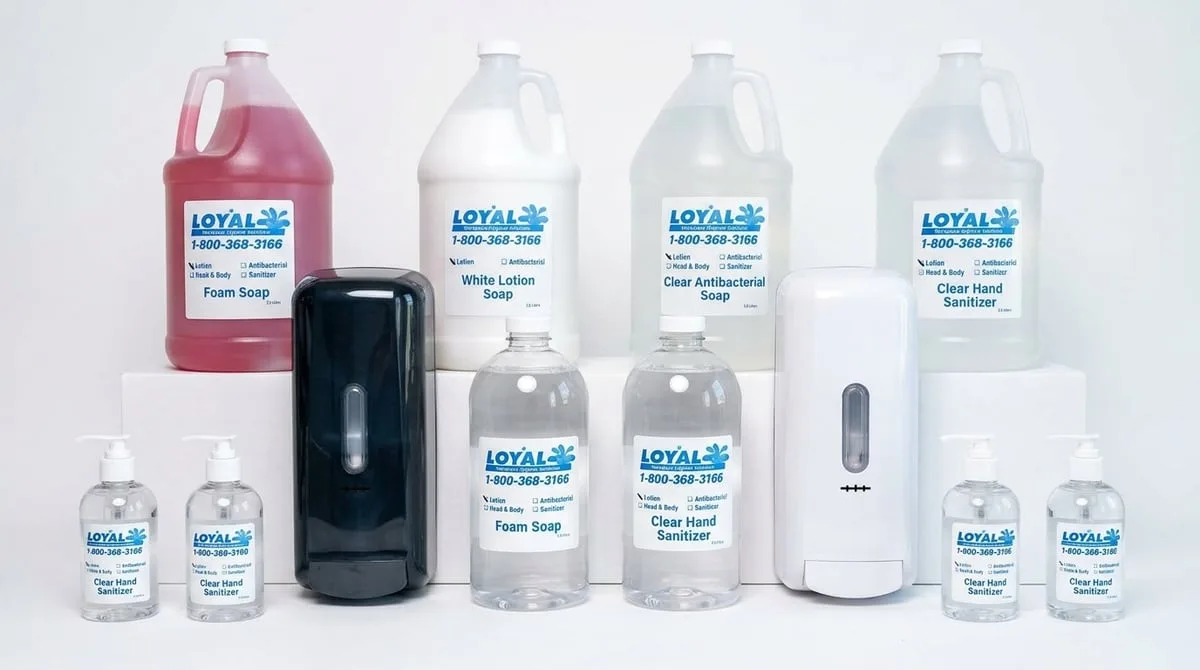
Loyal installs soap and sanitizer dispensers free, in manual and touchless styles, in black or white to suit your restrooms. Every dispenser we install is covered for as long as you're a customer: if it breaks, we fix or replace it at no charge. Our route reps refill on a fixed schedule and adjust quantities as your traffic changes, so the dispenser in your busiest restroom stays full.
Related reading: What Is a Full-Service Hygiene Provider? (And Why It Beats Ordering From Amazon)
Upgrade your dispensers at no cost
Get a free consultation. We'll recommend the right dispensers for each space and install them free.
Schedule my free consultationFree Resource: Download our Commercial Restroom Compliance Checklist — covers OSHA standards, ADA requirements, and daily inspection schedules.